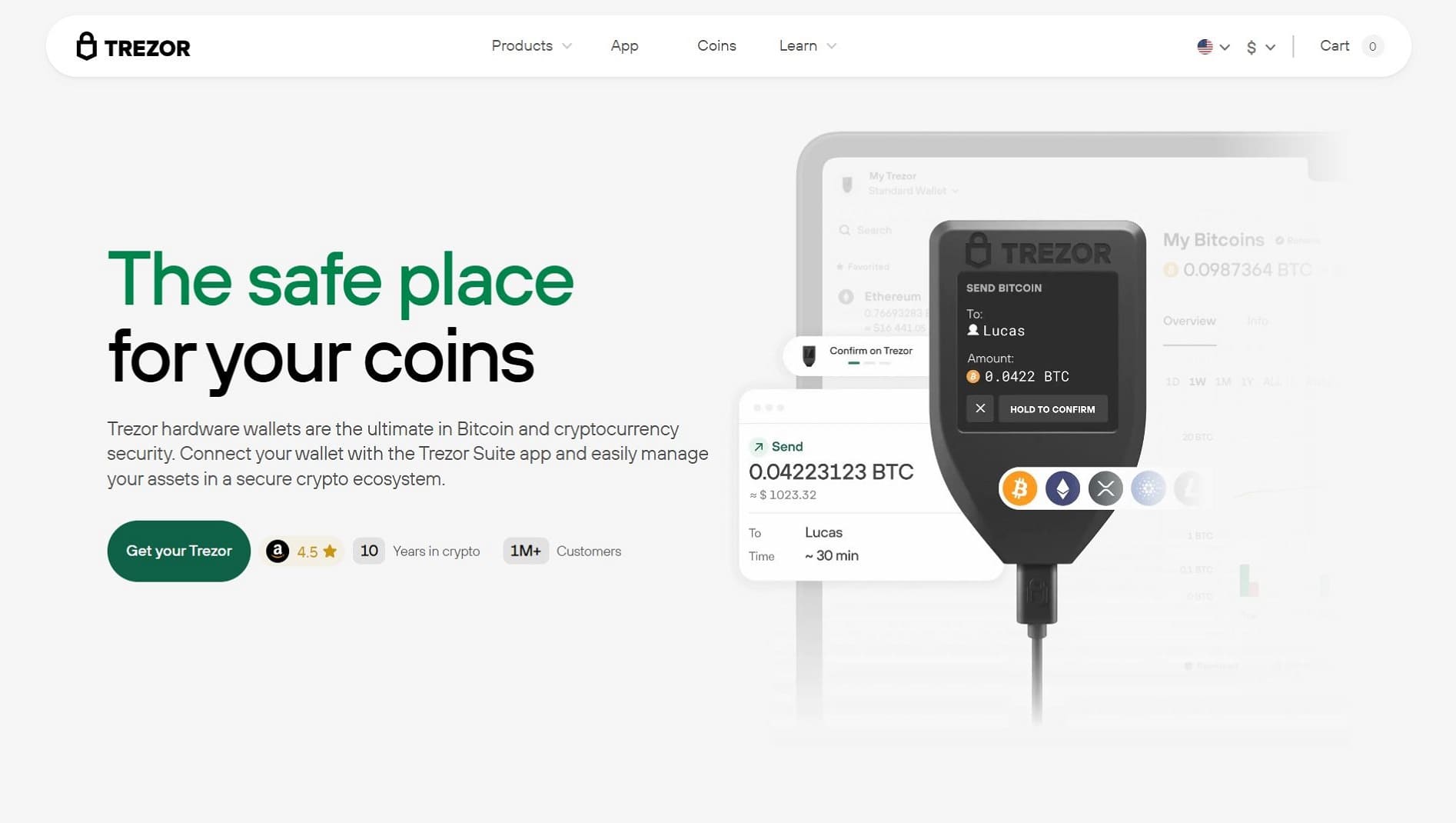
Step 1: Download and Install Trezor Suite
To get started with Trezor Suite, the first step is to download and install the application. Trezor Suite is available for Windows, macOS, and Linux, and it provides a sleek, intuitive interface for managing your Trezor device.
Go to the Official Trezor Suite Download Page:
Visit https://trezor.io/trezor-suite to download Trezor Suite.
Choose Your Operating System:
Select the version that’s compatible with your system: Windows, macOS, or Linux.
Follow the on-screen instructions to complete the download and installation process.
Complete Installation:
Once the installation is finished, you can launch Trezor Suite on your desktop.
Step 2: Connect Your Trezor Device
After installing Trezor Suite, the next step is to connect your Trezor hardware wallet to your computer.
Plug in Your Trezor:
Use the provided USB cable to connect your Trezor Model One or Trezor Model T to your computer.
For Trezor Model T, Bluetooth connectivity is also available for mobile use.
Unlock Your Trezor Device:
Open Trezor Suite, and you will be prompted to enter your PIN code on your Trezor device.
Your PIN code protects your device and is required for every transaction, adding an extra layer of security.
Step 3: Set Up a New Wallet or Restore from Backup
If you’re using Trezor Suite for the first time, you’ll need to either set up a new wallet or restore an existing wallet using your recovery seed.
Option 1: Create a New Wallet
Create a Wallet: Select the "Create a new wallet" option. Trezor Suite will guide you through the process.
Choose a PIN: Set up a secure PIN to protect your device.
Backup Your Recovery Seed: The most crucial step during the setup process is to write down your recovery seed (12 or 24 words). Store it securely, as this is your only way to recover your funds if the device is lost or damaged.
Option 2: Restore from Backup
Recover Wallet: If you have an existing Trezor wallet, select “Recover Wallet”.
Enter Recovery Seed: Enter the 12 or 24-word recovery seed you wrote down when you first set up your wallet. This will restore your previous wallet settings and funds.
Step 4: Install Cryptocurrency Apps
Trezor Suite allows you to install cryptocurrency apps for the different assets you want to manage. These apps are required for securely storing and interacting with your digital currencies.
Navigate to the Apps Section:
Open Trezor Suite and go to the “Apps” section.
Install Cryptocurrency Apps:
Trezor supports a wide variety of cryptocurrencies. Install the apps for coins such as Bitcoin (BTC), Ethereum (ETH), Litecoin (LTC), Bitcoin Cash (BCH), and many others.
Select the apps you wish to manage and install them on your device.
Access Your Coins:
Once installed, Trezor Suite will display the balance and transaction history for each cryptocurrency you’ve installed.
Step 5: Manage Your Crypto Portfolio
Now that you have installed the necessary apps, you can start managing your cryptocurrency portfolio with Trezor Suite.
View Your Portfolio:
Trezor Suite provides a comprehensive dashboard that shows your portfolio’s performance, balances, and the value of your assets.
You can track multiple cryptocurrencies and view your balance in both your local currency and the cryptocurrency’s native value (e.g., BTC, ETH).
Send and Receive Cryptocurrencies:
Send Crypto: To send cryptocurrencies, select “Send”, enter the recipient's address, and specify the amount. Confirm the transaction on your Trezor device to finalize it.
Receive Crypto: To receive funds, select “Receive”, and Trezor Suite will generate a receiving address. Share this address with the person sending you crypto.
Verify the Address: Always double-check that the address shown on the Trezor Suite matches the address on your Trezor device to ensure the transaction is safe.
Track Transactions:
Trezor Suite tracks your transaction history, allowing you to review past transactions, including transaction IDs, statuses (pending or confirmed), and fees.
You can also see total received and sent amounts, making it easy to stay on top of your wallet activity.
Step 6: Regularly Backup and Secure Your Wallet
One of the most important features of Trezor Suite is that it ensures the safety of your wallet and digital assets. Here are some essential tips for maintaining your security:
Backup Your Recovery Seed:
Your recovery seed is your wallet’s backup. If your Trezor device is lost, stolen, or damaged, you can use your recovery seed to restore your funds.
Write down your recovery seed on paper and store it in a safe, offline location.
Use a Strong PIN:
Always use a strong PIN for your Trezor device. A PIN is required to access your device, and it adds an additional layer of security to your wallet.
Enable Passphrase (Optional):
Trezor Model T users can enable a passphrase in addition to the recovery seed, which adds an extra level of security. A passphrase creates a hidden wallet that only you can access with the correct passphrase.
Keep Software Updated:
Trezor regularly releases firmware updates to improve security and functionality. Always ensure you are using the latest version of Trezor Suite and your device firmware.
To check for updates, go to Settings > Device in Trezor Suite.
Step 7: Restoring Your Wallet Using Trezor Suite
In the unfortunate event that your Trezor device is lost or damaged, you can use your recovery seed to restore your wallet on a new Trezor device.
Obtain a New Trezor Device:
Purchase a new Trezor hardware wallet and connect it to your computer.
Restore Your Wallet:
Open Trezor Suite and select “Recover Wallet”.
Enter the 12 or 24 words from your recovery seed to restore your wallet’s contents.
Verify Your Funds:
After restoring your wallet, verify that all your cryptocurrencies and transactions have been correctly restored in Trezor Suite.